theblacklock.shop

Charcoal grill. 55-day dry-aged British beef. Manchester. Walk-ins from noon, seven days.

CHOPS / CHARCOAL / NOT MUCH ELSE

Chops over coal. That is the whole idea.
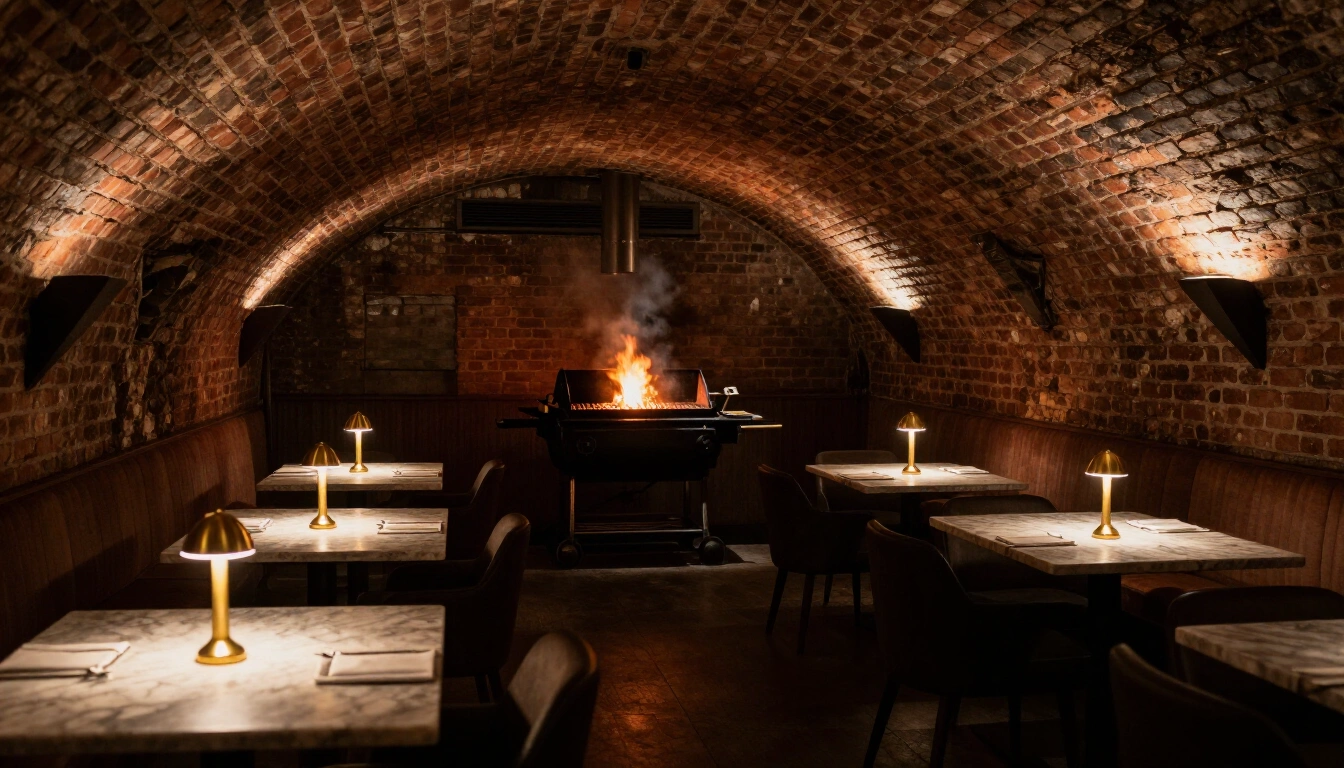
British beef, lamb and pork from four farms we name on the menu. Every animal comes in whole. We dry-age the beef on site for a minimum of 55 days, then grill it over lump charcoal and nothing else. No gas, no sous vide, no sauce hiding a thin cut. Lunch from noon, dinner until late, and a run of tables held back every service for people who did not plan ahead.
Basement chophouse dining room with a charcoal grill glowing at the open pass
DAYS MINIMUM DRY-AGE
0
FARMS, ALL NAMED ON THE MENU
0
HOURS THE FIRE STAYS LIT
0
DAYS A WEEK, LUNCH AND DINNER
0
HOW WE WORK

Four decisions that shape everything on the plate

Farms we can name

We buy from four farms and print their names next to the cuts. If a farm cannot supply a week, the cut comes off the menu rather than getting quietly swapped for something else.

Aged on site, not in transit

Beef hangs in our own room for 55 days minimum, some cuts to 90. We control the humidity and we take the loss on trim, which is roughly a fifth of the weight we paid for.

Charcoal only

One grill, lump charcoal, no gas assist. It is slower and it costs more per cover, but it is the only way to get the crust that makes a chop worth ordering.

Tables held for walk-ins

A third of the room stays unbookable at every service. Turn up, give your name, have a drink at the bar. Most people wait under 30 minutes on a weeknight.

THREE WAYS IN

Start here

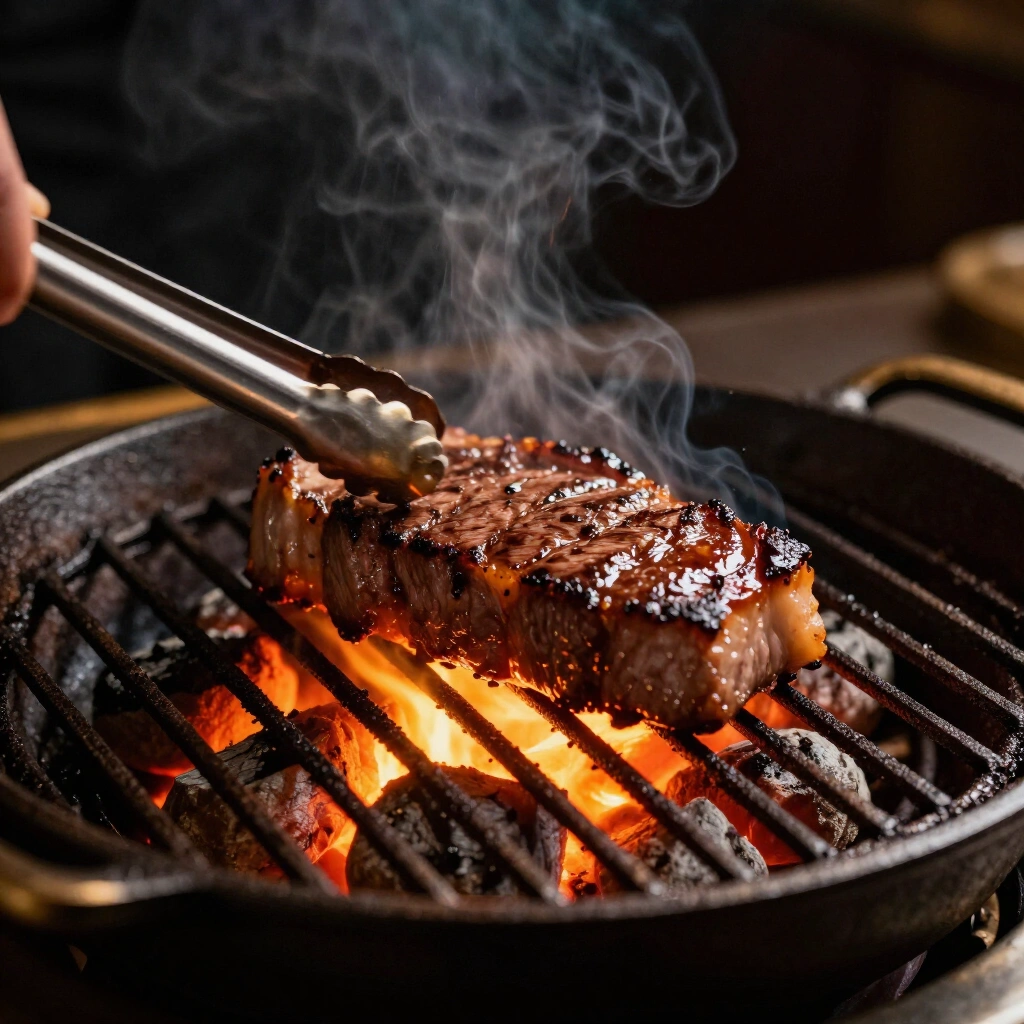
Thick beef chop searing over lump charcoal on cast-iron grill bars

The chop board

Beef, lamb and pork skinny chops piled onto charcoal-grilled flatbread, cut to share between two or four. It is the cheapest way to taste the whole range in one sitting, and it is what we send out when someone asks us to choose. Read what goes into each cut and how long it hangs before it reaches the grill.
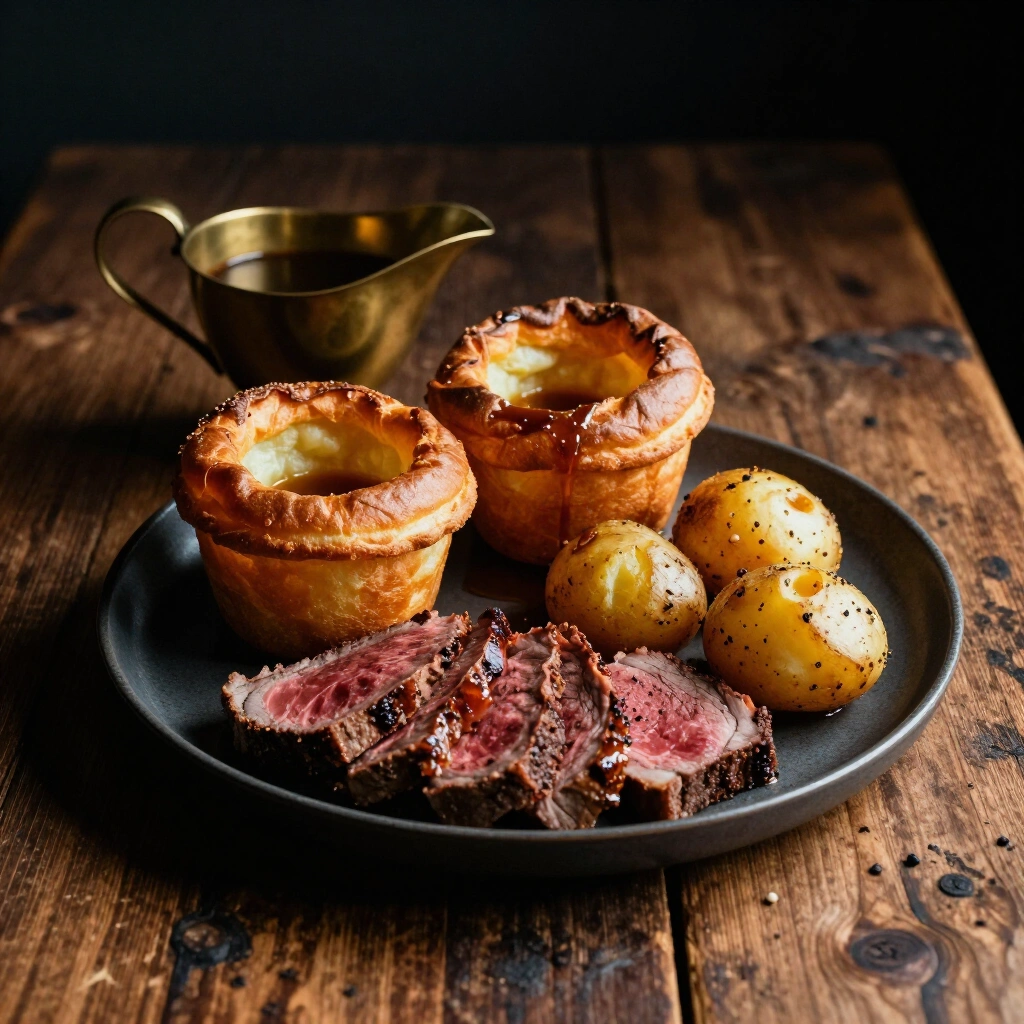
Sunday roast platter with sliced rare beef, Yorkshire puddings and a gravy jug

Sunday roast

Sundays the grills come down and the fire pits go on. Rib of beef hung over open coals, dripping-roasted potatoes, Yorkshires the size of a fist, and gravy that keeps coming until you tell us to stop. One menu, no substitutions, served from 11:45 until the beef runs out. See how the day is built.
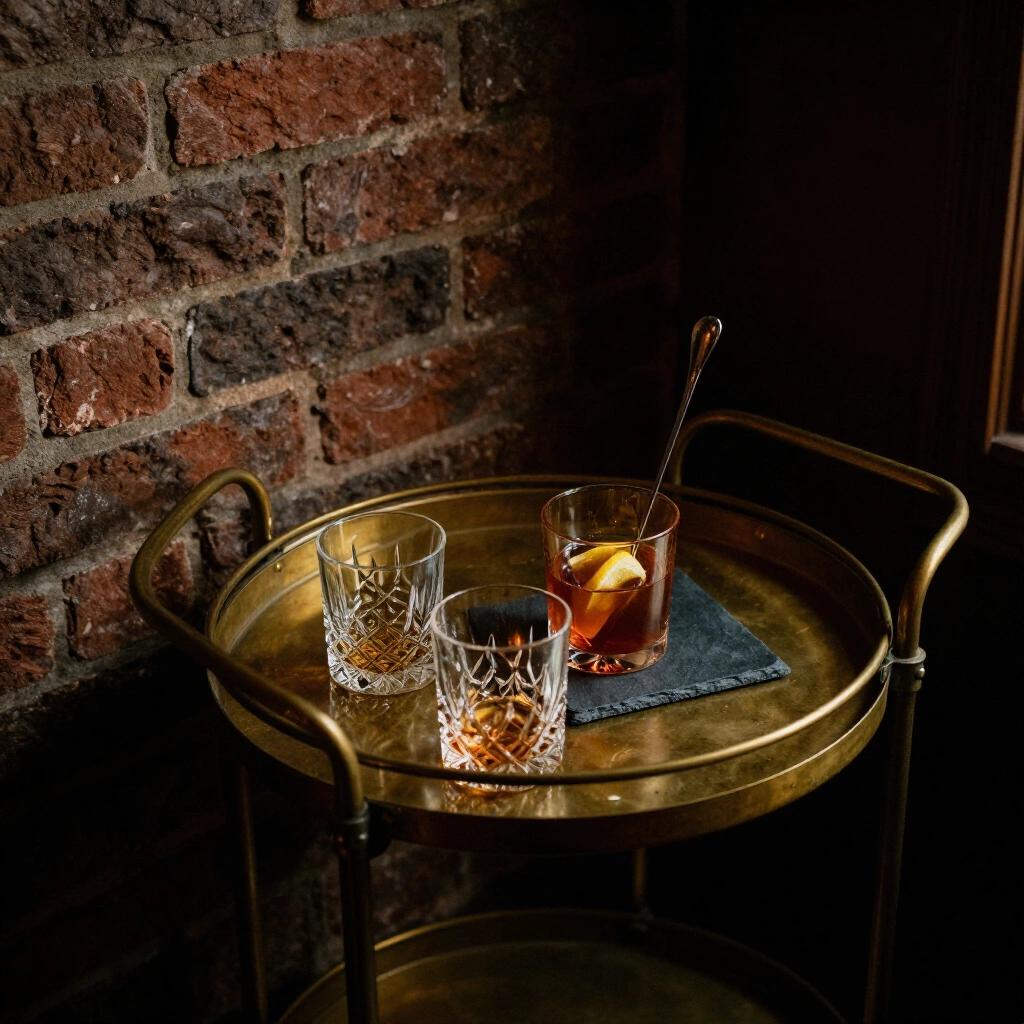
Brass cocktail trolley with cut-glass tumblers in a dim corner of the bar

The trolley

Old fashioneds mixed at your table from a brass trolley, wine poured on tap so we can sell good bottles by the glass without losing half to oxidation. Six reds, four whites, changed every six weeks. Details on timing, group sizes and getting a seat at the bar.

SOURCING AND CUTS

What we buy, and why it costs what it costs

Most steakhouse menus are a list of cuts with no farm attached. That is a choice, and it is usually a commercial one, because naming a farm means you cannot switch suppliers when the price moves. We name ours. Four farms, all in the north west and the south west, all working with native breeds on grass for most of the year.

Whole animals, four farms

We buy whole carcasses rather than boxed primals. That means we take the sirloin and the rump, but also the bavette, the onglet, the featherblade and the bits nobody puts on a blackboard. A whole beef animal gives us roughly 280kg of usable meat and only about 12kg of that is fillet.
Buying this way forces the menu to follow the animal instead of the other way round. When we run out of a cut we run out. You will see cuts appear for three weeks and then disappear until the next animal, and that is the system working rather than failing.
The trade is on price. Whole-carcass buying costs us less per kilo than boxed primals but wastes far more labour, so the saving mostly goes back into the butchery hours rather than the bill. We are not cheaper than a chain. We are more specific.

The chops, cut by cut

Our beef chop is cut from the fore rib at 400g on the bone, thick enough that the centre stays at 52C while the outside builds a crust. Lamb chops come off the loin at 180g, trimmed but with the fat cap left on because that fat is where the flavour sits. Pork is a 250g cutlet from a Middle White cross, brined for six hours.
Thickness matters more than grade. A thin ribeye from a well-raised animal will still overcook before it colours. We cut everything at 30mm minimum for this reason, which is why you cannot order a chop rare and expect it in eight minutes.

Dry-ageing on site

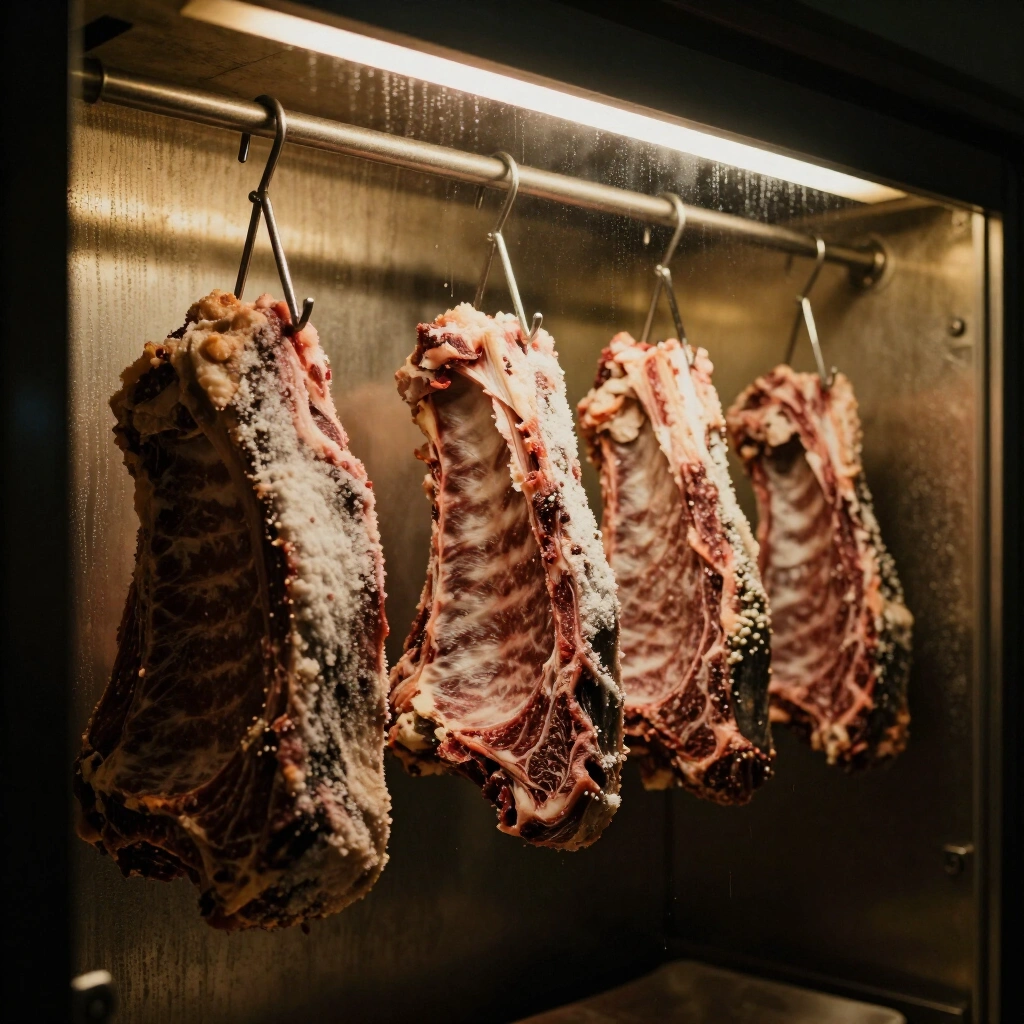
Beef hangs in our own room at 2C and 80 percent humidity. Fifty-five days is the floor. Some fore ribs go to 90 when the fat cover allows it, and those get listed separately with the date they went in.
Ageing does two things. Enzymes break down connective tissue, which is the tenderness people talk about. Water leaves the muscle, which concentrates flavour and is also why the meat gets expensive: a 90-day rib loses close to 30 percent of its weight, and we still paid for all of it.
Here is the honest caveat. Past about 60 days the change is mostly funk rather than tenderness, and not everyone likes it. If you have never eaten long-aged beef, order the 55-day and work up. Ask the floor team and they will tell you the same thing.

The cuts most people walk past

Bavette, onglet and featherblade come off the same animal as the rib and cost about a third as much. They are not consolation prizes. Onglet carries more mineral flavour than anything else on the board, which is why French butchers kept it back for themselves and called it the butcher’s cut.
They sit at the bottom of most menus because they punish mistakes. Onglet taken to medium goes tough and stays tough. Bavette sliced with the grain instead of across it eats like elastic. Both need a cook paying attention and a kitchen willing to bin one when it goes wrong.
If you are ordering for four, put one rib chop and one onglet on the table and share both. You will learn more about how we cook in ten minutes than anything written here can tell you.

What this means for the bill

A 400g bone-in chop from a named farm, aged 55 days and cooked over charcoal, is not going to land at the price of a supermarket sirloin. It should not. What we can promise is that the number on the menu is the number you pay: no cover charge, no discretionary service added without asking, no market price left blank.
Portion weights are printed because we would rather you ordered accurately than generously. A 400g bone-in chop is roughly 300g of meat once the bone is out, which makes it a large main for one and a thin one for two. The chop board works out cheaper per head than two separate mains, and the floor team will tell you so if you ask. Nobody here works on commission.
Beef ribs hanging on steel hooks in the dry-ageing room
THE CUT SELECTOR

Pick by how you eat, not by what sounds expensive

Fillet is the most expensive thing on almost every steak menu and the least interesting thing on ours. The table below is what our floor team actually uses when someone asks for a recommendation. Rest times are as important as cook times: a chop pulled at 14 minutes and cut straight away will lose its juice onto the board, which is why we hold everything for at least four minutes before it leaves the pass. Times assume medium rare, roughly 52C in the centre. Tell us if you want it cooked further and we will adjust the cut as well as the timing, because some of these do not take heat well.
CutWeightAgeFatOff the fireOrder it if
Fore rib chop400g bone-in 55 daysHigh14 min + 8 rest You want the full charcoal crust and do not mind fat.
Fore rib, long-aged400g bone-in 90 daysHigh14 min + 8 rest You have eaten aged beef before and liked the funk.
Bavette280g21 days Low6 min + 6 rest You like a loose grain and a lot of beef flavour for the money.
Onglet240g14 days Low5 min + 6 rest You order rare and mean it. Past medium it turns to rope.
Lamb loin chops180g x2 10 daysMedium7 min + 4 rest You want the fat cap crisp. Ask for it well rendered.
Pork cutlet250gBrined 6h Medium9 min + 5 rest You have written pork off. This is the one that changes minds.
Chop boardShares 2 to 4 MixedMixedSent in waves It is your first visit, or you cannot decide. START HERE
One thing the table cannot tell you: the grill runs hotter at the back than the front, so a busy Saturday and a quiet Tuesday are not identical. If you are particular about temperature, say so when you order rather than sending it back. We would rather cut a fresh one than argue about it.
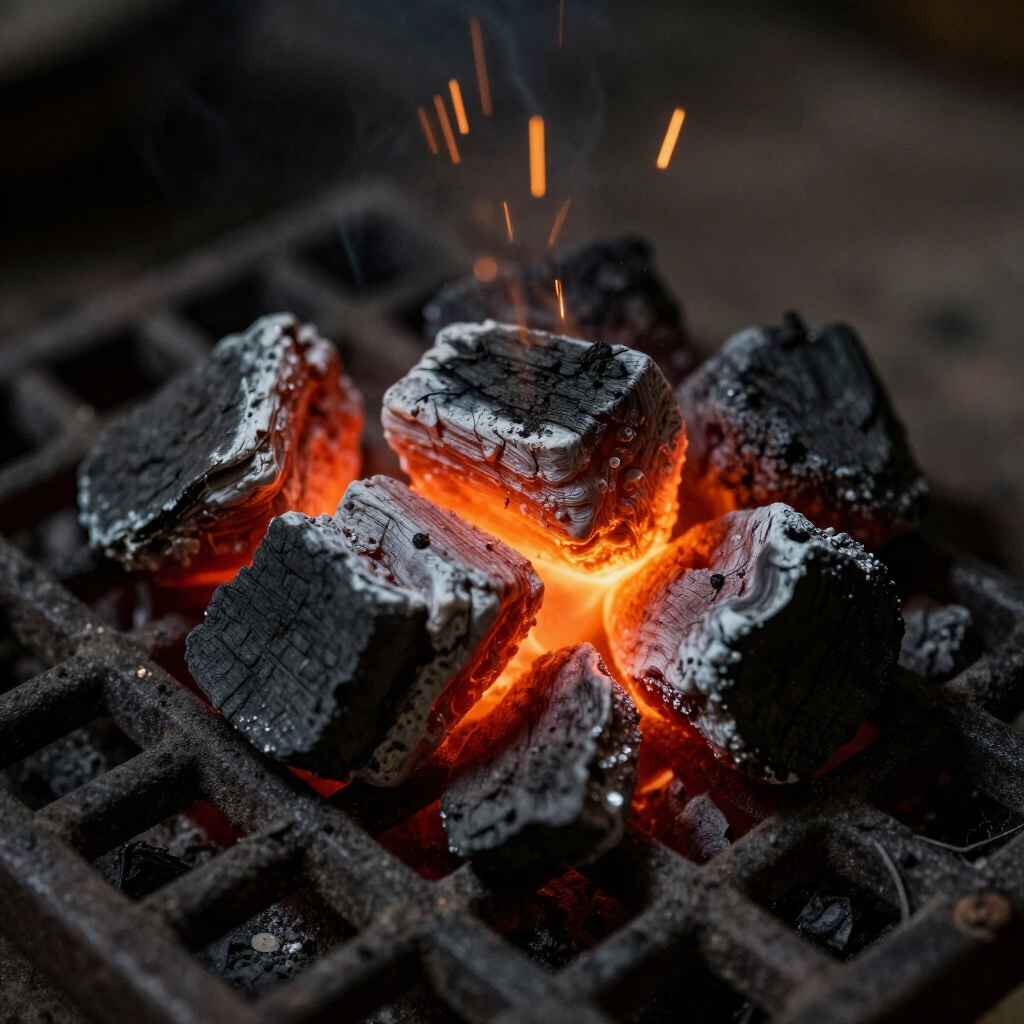
Close view of white-hot lump charcoal and sparks rising through iron grate bars
FIRE, COAL AND TIMING

Why the grill is the most expensive thing we own

A gas grill costs a few thousand pounds, holds a steady temperature and can be run by anyone after a day of training. A charcoal grill costs more to build, more to run, and takes a year before a cook can be trusted alone on it. We chose the second one and we think the difference shows up on the plate.

What charcoal does that gas cannot

Lump charcoal burns at around 700C at the coal bed and radiates infrared heat rather than heating the air around the meat. That radiant heat drives the surface of a chop past 150C quickly, which is where browning reactions start producing the flavour compounds people describe as char.
Gas heats the air. Air is a poor conductor, so the surface takes longer to colour and the inside catches up before the crust arrives. You can get close with a very hot gas grill and a thin cut, but on a 30mm chop the gap is obvious.
Fat dripping onto coals is the other half of it. It vaporises and comes back up as smoke that settles on the meat. That is why our lamb tastes different from lamb cooked in a pan with the same salt and the same rest.

The daily fire

The fire is lit at 10:30 and burns until close, roughly 12 hours. Two grills run off one bed. The back is kept deep and hot for searing, the front thinner and cooler for resting and for cuts that need gentler treatment.
We burn British-made lump charcoal from managed woodland rather than imported briquettes. It costs about three times as much per kilo. Briquettes contain binders that give off a chemical note, and if you have ever tasted a barbecue that reminded you of lighter fluid, that is what you were tasting.
Ash management is the unglamorous half of it. A bed that has not been raked builds an insulating layer that drops surface temperature by 100C without changing how the coals look. Someone clears and rebuilds the bed twice a service, next to a fire that has been burning since half past ten in the morning.

Salt, and the ten minutes before the fire

Chops come out of the fridge 40 minutes before they are cooked. Cold meat dropped straight onto coals seizes at the surface while the centre lags so far behind that the outside burns before the inside moves. That is the most common reason a home grill turns out grey bands under the crust.
We salt heavily and late, about two minutes before the chop hits the bars. Salt early and it pulls moisture to the surface, which then has to boil off before browning can start. Salt at the last moment and it sits on a dry surface where it belongs. There is a school that salts a day ahead and dries the meat uncovered in the fridge, and that works, but it is a different result and it is not ours.
No oil goes on the meat. Fat renders out of a chop quickly enough to do the job on its own, and oil on the surface smokes and turns bitter above 200C.

Reading a chop

Cooks here work by touch and by a probe, not by a timer. Timing on our cut selector is a guide, and it shifts with the thickness of the animal, how long the meat sat out of the fridge, and how deep the coal bed is at that moment in service.
Resting is not optional. Muscle fibres contract under heat and push moisture toward the centre. Cut too early and that moisture leaves. Four to eight minutes off the heat lets it redistribute, and the internal temperature climbs another 3C to 5C while it sits, which we account for when we pull it.
The caveat worth stating: charcoal is less consistent than gas, and anyone who says otherwise is selling something. On a very busy service, one chop in fifty comes out further along than we want. Send it back. We will cut another and we will not make it awkward.
If you want to try this at home, the useful part is not the charcoal. It is thickness, salt timing and rest. Buy one 30mm chop instead of two thin steaks, take it out of the fridge early, and give it half the cooking time again as rest. That gets you most of the way there on a domestic grill.
THE ROOM AND THE PASS

A quiet Tuesday and a full Saturday

Photographs from service and from the hours before it. The room seats 74 downstairs plus 14 at the bar, the ceilings are low, and it gets loud after eight. That is the trade for a basement with brick vaults, and most people decide within ten minutes whether it is their kind of room. Nothing below is styled for a shoot. The plates went out to tables afterwards and the room is the room.
THE MENU

One page, read top to bottom

Our menu fits on one side of A5 and it changes about every six weeks, faster when a farm runs short. There is no separate steak list, no market price, no upsell to a bigger cut carried out on a board for your approval. What follows is how the page is built and why each part sits where it does.

Before the chops

Five or six things, all designed to be eaten with your hands while you drink something. Bone marrow with a spoon and toast. Pressed lamb belly cut into squares. Beef dripping flatbread that comes hot enough to burn your fingers. Anchovy on butter, which is one of those combinations that sounds wrong and converts about nine people in ten.
We keep this section short because the chops are large and most tables over-order at the start. Two of these between four people is right. Four is generous. Six and you will leave food on the board, which annoys us more than it annoys you.

The chops and the board

The middle of the menu is the reason to come. Beef, lamb and pork, listed with weight, ageing time and the farm. The chop board sits at the top of that list because it is what we recommend to anyone eating here for the first time.
The board is sent in waves rather than all at once, which keeps the last piece as hot as the first. It arrives on charcoal-grilled flatbread and the flatbread is not garnish. It sits under the meat collecting everything that runs off, and by the end of the board it is the best thing on the table.
Portion the board by weight rather than by piece. Two people want about 700g of meat between them once the bone is out, four people want a shade over a kilo, and the floor team will talk you up or down if the numbers you have picked look wrong. They do this forty times a night and they are usually right.
Single chops are there for people who know what they want. If you are ordering one, the fore rib at 55 days is the safe answer and the onglet is the interesting one.

Sides that earn their place

Four sides, no more. Dripping-roasted potatoes cooked in beef fat that has been strained and reused for a fortnight. Charred hispi cabbage with anchovy butter. A green salad with mustard dressing sharp enough to cut the fat. Bone marrow gravy, which is the one nobody expects to need until they see it arrive at the next table.
We do not do chips. This is a stated position and people argue with us about it weekly. Chips need a dedicated fryer, a dedicated station and a cook watching them, and every hour of that is an hour not spent on the grill. The potatoes are better anyway.

Sunday

Sundays run on their own menu and the grills come down. Rib of beef hangs over open fire pits, cooked slower and further from the coals than a chop. It comes with dripping potatoes, a Yorkshire the size of a fist, greens, and gravy that keeps arriving until you say stop.
Service starts at 11:45 and finishes when the beef finishes, usually somewhere around half past seven. There are no substitutions and no separate carte, which disappoints roughly one table a week and we would rather be clear about it here than at the door.
Sunday is also the only day we take bookings for the long table at lunchtime, and the only day the bar runs a shortened drinks list. The trolley stays in its corner because the room is too full to wheel it anywhere, which is a genuine loss and the main reason some regulars come on a Saturday instead.

Puddings

Three. A white chocolate cheesecake that has been on the menu since we opened and will not be removed. A treacle tart with clotted cream. Whatever the pastry section is testing that week, listed by hand at the bottom of the page.
The honest caveat about puddings: after a chop board and sides, most tables cannot finish one each. Order two between four and ask for extra spoons. We will not be offended.

What we do not do

No tasting menu. No amuse bouche. No bread and butter charge. No fillet steak, because a cut with that little fat gets almost nothing out of a charcoal grill and we would rather sell you something the fire improves.
If any of that reads as difficult, it probably is. The menu is short because a short menu cooked properly beats a long one cooked adequately, and every item we remove is an item the grill section no longer has to think about at eight on a Saturday.
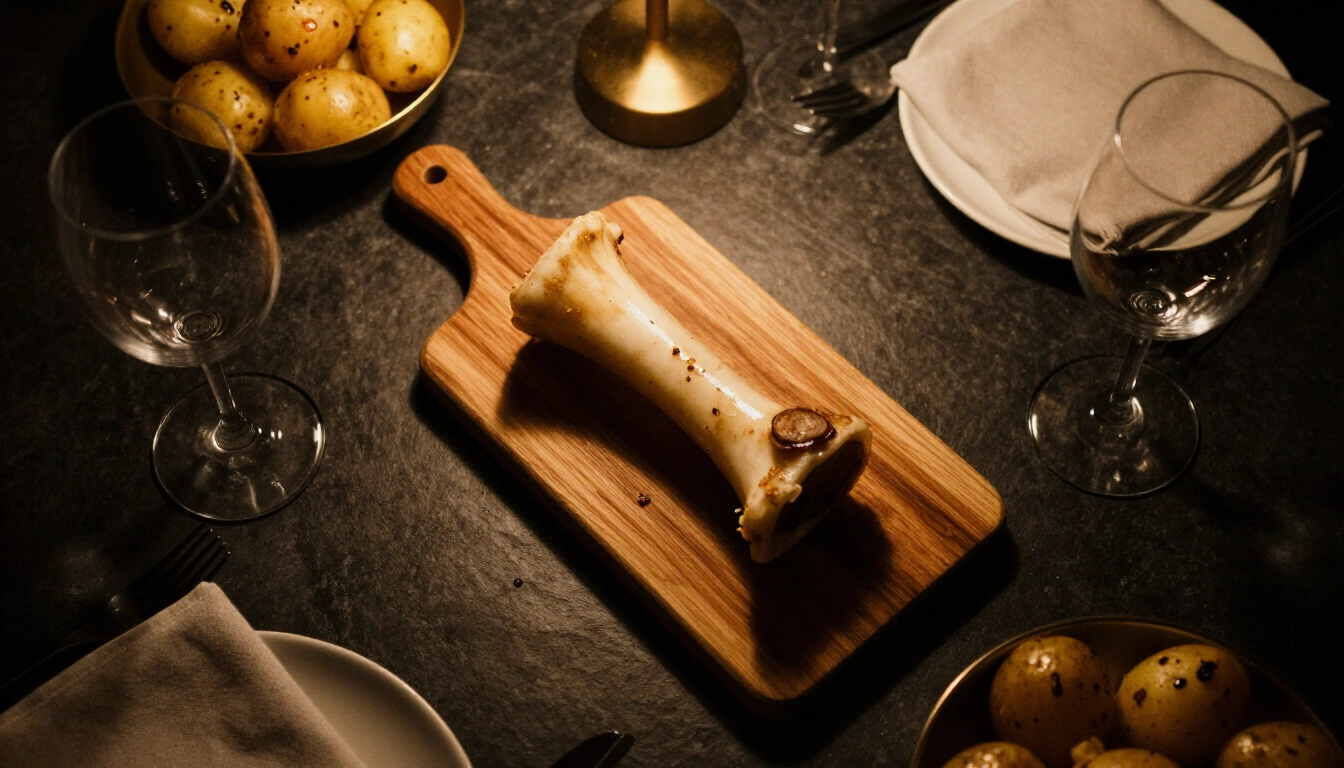
Overhead view of a full table mid service with a chop board, bone marrow and dripping potatoes
TWELVE MINUTES AT THE PASS

What a chop actually goes through

Filmed on an ordinary Thursday during service, no narration and no reshoots. You can watch a fore rib go from the ageing room to the board: trimmed, salted late, laid over the deep end of the coal bed, turned four times, probed, rested for eight minutes on a warm plate, then cut across the grain at the pass. Sound is on, because the noise a chop makes when it hits the bars tells you more about grill temperature than any thermometer reading. It is not a recipe video and there is nothing to follow along with. It is closer to twelve minutes of watching someone who has done a thing ten thousand times do it once more, which is either your idea of a good time or it is not.
PLANNING A VISIT

Booking, timing, and turning up without one

Getting a table here is easier than people assume, as long as you know how the room works. Two thirds of it can be booked. The rest is held back every single service, including Saturday night, and that policy has not changed since we opened.

How bookings work

Bookings open eight weeks ahead on a rolling basis, so a new day becomes available every morning at nine. We take reservations for two to eight people online. Anything larger goes through the events line because it needs a different section of the room.
We hold your table for 15 minutes. After that it goes back into the walk-in pool, which sounds harsh until you have stood at a bar watching an empty four-top on a Friday. If you are running late, call. We will hold it as long as we sensibly can and we would rather know.
There is no deposit for tables under eight and no card required. Groups of eight or more leave card details, and we charge a per-head fee only for a no-show with less than 24 hours notice. We have applied that charge twice in the last year.
Online booking covers lunch and dinner every day. The system will show a table as available up to about 20 minutes before the slot, and it stops there rather than at the door, so an empty screen at half past six does not mean an empty room. Call and ask.

Turning up without a booking

Give your name at the door and we will take a mobile number and text you when the table is ready. You are welcome to wait at the bar or go somewhere else nearby and come back. Most weeknight waits run under 30 minutes. Friday and Saturday between seven and nine, expect closer to an hour.
The quiet windows are worth knowing. Monday and Tuesday all evening. Wednesday to Friday before 6:30 or after 9:15. Lunch on any weekday except Friday. If you want the room at its calmest, come at noon on a Tuesday and sit at the bar.

Groups and the long table

There is one long table that seats 14. It is not private, it sits in the main room, and it is the only way to eat here as a group of that size. For anything over 14 we run a set menu at a fixed price per head, which we send ahead so nobody is doing mental arithmetic at the table.
Large groups eat the chop board format by default because it is the only way to get 14 chops out hot at the same time. If someone in the group needs an alternative, tell us when you book rather than on the night.
Set menus for large groups are priced per head and sent as a PDF, and we ask for numbers 72 hours ahead so the butchery can cut for the right count. Changing the number down inside that window is fine up to two people. Below that we have already cut the meat.

Access, children and dietary needs

The dining room is downstairs. There is a lift, and the accessible toilet is on the same level as the tables. Tell us when you book and we will put you at a table with room to manoeuvre rather than one wedged against the wall.
Children are welcome and there are high chairs, though the room gets loud from eight onward and most families choose lunch or an early sitting. We do not have a children’s menu. A lamb chop and potatoes suits most of them and we will charge accordingly.
Vegetarians can eat here but the menu is not built for them, and we would rather say that than pretend otherwise. There are usually two or three dishes plus the sides. If you are booking for a group with a vegetarian in it, that is fine. If you are a table of four vegetarians, there are better places to spend your evening and the floor team will happily recommend one.

Finding us

Address, nearest tram and rail stops, and parking guidance go here before launch. Replace this paragraph with the real details and add the same address to the footer and to your Google Business Profile so the three match exactly.
QUESTIONS WE ACTUALLY GET ASKED

Before you book

Do I need to book, or can I just turn up?

Both work. Two thirds of the room is bookable up to eight weeks ahead and the remaining third is kept back for walk-ins at every service, including Saturday night. Give your name at the door, leave a mobile number, and we will text you when the table is ready. Weeknight waits are usually under 30 minutes. Between seven and nine on a Friday or Saturday, plan for closer to an hour.

It is beef, lamb and pork chops cut thin, grilled over charcoal and piled onto flatbread that catches everything running off the meat. It is sent out in waves so the last piece is as hot as the first. Ordered for two it is a full meal with one side. For four it works with three sides and a starter. It is also the cheapest way to taste the whole range in one sitting, which is why we recommend it to anyone eating here for the first time.

Fillet has very little intramuscular fat, and fat is what a charcoal grill converts into flavour. Put a fillet over coals and you get an expensive piece of meat that tastes much the same as it would from a pan. We would rather sell you a fore rib chop or an onglet at a lower price and have the fire actually do something. If fillet is what you want, we will point you to a nearby restaurant that does it well.

Every beef cut hangs a minimum of 55 days in our own room at 2C. Some fore ribs go to 90 days when the fat cover allows, and those are listed separately with the date they went in. Past about 60 days the change is mostly in the funk rather than the tenderness, and it is not to everyone’s taste. If you have not eaten long-aged beef before, start at 55 and work up on a later visit.

No. Chips need their own fryer, their own station and a cook watching them through service, and we would rather spend those hours on the grill. The dripping-roasted potatoes are cooked in beef fat that has been strained and reused for a fortnight, and they are better than our chips would be. This is the question we get asked most and the answer has not changed.

Yes, but the menu is not built around them. There are usually two or three vegetarian dishes plus the sides, and the kitchen will adapt where it sensibly can. If one person in your group is vegetarian, they will eat well enough. If your whole table is vegetarian, you will have a better evening somewhere else, and we would rather tell you that here than have you find out at the table.

The grills come down and the fire pits go on. Rib of beef is hung over open coals and cooked slower than a chop, then served with dripping potatoes, a Yorkshire pudding, greens and unlimited gravy. There is one menu and no substitutions. Service starts at 11:45 and ends when the beef runs out, usually around half past seven. Booking ahead is sensible because Sunday fills faster than any other day.

Up to eight books online like any other table. Nine to 14 goes on the long table in the main room, which is not private. Over 14 runs on a set menu at a fixed price per head, sent to you in advance. Groups of eight or more leave card details and are charged per head only for a no-show with under 24 hours notice.

There is no cover charge and no charge for bread. A discretionary service charge is added to tables of eight or more and shown clearly on the bill. You can ask for it to be removed and nobody will make it awkward. Menu prices include VAT and are the prices you pay.

The dining room is downstairs and there is a lift, with the accessible toilet on the same level as the tables. Tell us when you book and we will seat you somewhere with room to move. Children are welcome and we have high chairs, though the room is loud after eight, so lunch or an early sitting usually works better. There is no children’s menu; a lamb chop and potatoes covers most of them.

A third of the room is still unbookable tonight

Book a table eight weeks out, or give us your name at the door and wait at the bar with an old fashioned. Both get you the same chop, cut from the same animal, off the same fire.
ABOUT THIS PAGE

The Whitworth Grill Editorial Team

Written by the people who run the pass, the butchery and the floor, and checked against the kitchen the week it went live. Cooking times, ageing dates and farm names are reviewed every six weeks when the menu changes. If something on this page is out of date, the kitchen is right and the page is wrong, so tell us and we will fix it.

Published 27 August 2026. Last reviewed 27 August 2026.